Overall, looking back at the high concept project i've been working on, I feel that I learnt a lot whilst writing for my idea. It was definitely a new experience for me as I had never worked on my own on something this scale. It sometimes felt like a challenge for me to keep on top of what I was doing but I feel glad and accomplished that I was able to to complete the tasks that I set out to do. Particularly working on the different aspects of the book was stressful at times but I feel that I overcame any major problems I faced.
There are a few minor things I might have done differently if I was planning the project from the start. However I feel that in many ways i've largely improved my work ethics, particularly in regards to working towards deadlines.
The Treatment and the Script were the largest elements I was working on and finishing. Writing these was a particularly rewarding experience, especially in the context of the book itself. I would definitely like to work on projects such as this in the future. Being a screenwriter allowed me to concentrate on one very important aspect of the creative side of TV production. It has made me reflect on other writing ideas I could possibly work on as well as amendments to my concept, 'Different Perspectives'. The most exciting thing i've realised about projects such as this is that they're open ended. Meaning I can pick it up straight where I left off. So scriptwriting is a skill I would definitely like to continue working towards during and after my course ends.
Wednesday, 9 December 2015

Saturday, 28 November 2015
Pre-Production Unit: Looking into Different Screenwriters
Something that I need to do whilst writing my script is to make sure that I keep my characters believable, this is something that I need to focus on if I want to be a success. For this reason I felt it would be a good idea to investigate further into different screenwriters, to see how they wrote in certain situations to make the scripts appealing and believable towards an audience.
An episode of Charlie Brooker's Screenwipe is currently on Youtube and it was very useful towards giving an insight into different screenwriters and how they tackle their subject. Instead of the usual half hour of different subjects, this 50 minute episode was dedicated entirely to TV writing, and Brooker interviewed some very notable guests: Russell T Davies (Doctor Who), Tony Jordan (EastEnders), Graham Linehan (Father Ted, IT Crowd), Jesse Armstrong and Sam Bain. (Peep Show)
An episode of Charlie Brooker's Screenwipe is currently on Youtube and it was very useful towards giving an insight into different screenwriters and how they tackle their subject. Instead of the usual half hour of different subjects, this 50 minute episode was dedicated entirely to TV writing, and Brooker interviewed some very notable guests: Russell T Davies (Doctor Who), Tony Jordan (EastEnders), Graham Linehan (Father Ted, IT Crowd), Jesse Armstrong and Sam Bain. (Peep Show)
(The link works although the picture isn't showing in the video)
They talk about their own writing processes and it's interesting to see the differences in the way they write and approach a screenplay. For some, outlining is imperative, for others it's not so important. Some can't write without exactly the right characters in mind, for others the characters simply evolve into their mindsets, fully formed. I have to say it was comforting to hear about all the times they admitted they had writers block and made mistakes.
It's important to note whilst writing that you don't always get want to want out of an idea, it takes a lot of preparation and patience to get to the point you are happy with what you've got.
Sometimes you might never happy with what you've worked on. This is why i've found it very inspiring and enlightening to find out more from those working in the same field I am working towards. This is why I have had also discussions with other students in my class who are also creating their own ideas. It is good to surround yourself with writers who can help your own sense of judgement whilst writing as well as the competitive streak to always outdo yourself whilst doing so.
It's important to note whilst writing that you don't always get want to want out of an idea, it takes a lot of preparation and patience to get to the point you are happy with what you've got.
Sometimes you might never happy with what you've worked on. This is why i've found it very inspiring and enlightening to find out more from those working in the same field I am working towards. This is why I have had also discussions with other students in my class who are also creating their own ideas. It is good to surround yourself with writers who can help your own sense of judgement whilst writing as well as the competitive streak to always outdo yourself whilst doing so.
Sunday, 22 November 2015
Pre-Production Unit: Scriptwriting Research
Because I wanted to create a high concept idea for my Uni project I first had to research into what a screenwriter is and does to have a complete grasp of what it is I want to achieve.
Dictionary.com defines a screenwriter as: a person who writes scripts, as for movies, radio, or television.
After searching on the Internet I began to think about what is really necessary to include before you start writing a screen play. Using Creative Skillset as a source I came across some of there own suggestions and tips, which include:
- Have an in-depth understanding of story, plot and narrative
- Understand the different ways that films affect audiences
- Be familiar with current formats for presenting screenplays
- Be able to demonstrate creative imagination
- Be able to bring to life the individuality of characters
- Be ambitious and dedicated
I found this all incredibly useful. I was already familiar with these tropes but its very useful to have a guideline to follow, especially since i'm making a hypothetical script to be presented for Channel 4.
I realise that to make my project a success I need to keep the creativity consistently flowing throughout my production which means thinking deeply about what it is I want to get out of this idea and how I want it to come across to audiences. This is what makes a successful screenplay.
It seems to be the case that Screenwriters are required to be highly creative in the writing process, especially since it is such a competitive market. Most scripts end up not being green-lit, so it is very important to make it stand out more than anything.
Before an idea is sent off completely, a script development team attempts to create a finished product. This makes it easier when it comes to financing a project. Sometimes producers will bring in an additional Screenwriter to improve certain aspects. In this case, the Screenwriter may share a credit with the original Screenwriter. However since this is still the early developmental stage, this will all be something that happens in the aftermath of the script being chosen.
Pre-Production Unit: Learning about Scriptwriting
I have been trying to learn as much as possible about my role. One interview that I felt was especially useful in summing up exactly what a screenwriter job does was this interview with Jesse Armstrong, who writes for Peep Show, Fresh Meat and The Thick Of It.
In this interview, Jesse Armstrong and co-writer of Peep Show and Fresh Meat, Sam Bain give some very useful advice as to the tricks of bringing a story to life using the actors.
Jesse states that "if you have a dramatic situation it will be a comedic situation as long as you've built your characters right. "If you're trying to work out a plot, it doesn't necessarily have to read that funny on the page, as long as it reads dramatically." This is very useful advice, especially as a lot of the humour in comedic moments comes from the delivery, whereas writing certain jokes into the script can come across as forced.
Jesse states that "if you have a dramatic situation it will be a comedic situation as long as you've built your characters right. "If you're trying to work out a plot, it doesn't necessarily have to read that funny on the page, as long as it reads dramatically." This is very useful advice, especially as a lot of the humour in comedic moments comes from the delivery, whereas writing certain jokes into the script can come across as forced.
In regards to picking and choosing actors, Sam Bain suggests that "it's better to approach people who produce work that you really admire instead of just tossing your best material to proverbial swine".
Creating a distinct tone in a story is a skill that all writers have to master in order to draw their audiences in. As far as figuring out how on Earth to do that, Armstrong suggests having pictures of the cast (or of whoever the inspiration was for your character) and knowing what kind of show (or movie) you see it being like.
This is particularly necessary to consider when it comes to re-evaluating my own importance as a scriptwriter. It is the tone that I create whilst writing that largely sets the mood for the entire work.
As the person in charge of making the show however, I have to be as spot on as possible with what I do, and always go over it in depth to make sure it is well implemented.
One piece of useful advice I found when initially searching for tips on scriptwriting was "Write what you know." This is extremely useful because ultimately its important to write an idea that you're passionate about. There's no use stepping out of your comfort zone if its something you are not going to properly develop. This is something I really stuck to as I was writing out my story.
I think it is very important to outline your ideal story first. Consider it as all assumptions to begin with and then let your outline guide your research from then onwards. It's okay to be wrong sometimes and ultimately, it's okay to be wrong in your first draft too. Of course research may prove some things false but it'll open up other story possibilities for the future. Then of course the idea is something that you can work in indefinitely if you've not got a deadline. As long as the passion is there, than you are much more likely to succeed with your goals.
Monday, 16 November 2015
Pre-Production Unit: Designing The Poster
One of the things I decided I wanted to so when thinking of items to include in my pre-production package was a poster.
 I designed the poster for the major class project ‘Just Sayin’ earlier this year. For this I used photoshop and really got interested in this aspect of production. This is why i’ve decided I wanted to design one for this project too. I felt that I needed to have something eye catching that would get people interested in the idea. I also wanted to advertise Different Perspectives by showcasing the shows tone and style through the poster. I also knew that I needed something to add for my book cover.
I was already in the midst of choosing my actors when I decided to create a poster which would feature Lawrence in the role of Elliott. I knew that he would be perfect for the role because he had the type of look I had in mind when I was creating the character. When I wanted to talk to him about the role he unfortunately wasn’t at the studios but I sent him a Facebook message and he got back straight away.
He agreed and when we met up at the studios the next day I asked if he wouldn’t mind his likeness being used for the book and received his permission for the role. I talked with our resident Technician at UCA, Fergus Moloney to see whether he would be able to help with the equipment necessary to take the poster.
After this I sought and received filming permission for filming with Laura, and received filming space in Production Room 1.
However..
It turned out that the lighting wasn’t very good in the room, mainly because you couldn’t have the levels of it, which didn't allow for a good contrast. I talked about this with Fergus and after explaining the idea I showed him the concept artwork that Bethany has made up to show him what I was after. We both agreed that if it was a more cinematic, noir poster I was after, we would need a different room. So I received permission to set up in the lecture room instead, which was not only much spacier but had a much better contrast in terms of the lighting.
 |
| The lighting in the lecture room turned out better than expected. |
Using this room had a good payoff because of the improved lighting and it allowed for a greater level of atmosphere. After everything had been set up and I took some test shots I called in Lawrence and we got to work on trying to find the perfect image for the show’s poster.
Lawrence seemed to instinctively know what I was looking for which made the shoot very easy and thanks to Fergus’s suggestions beforehand I knew exactly how I wanted it to turn out. This made it very easy to get the pictures I wanted.
After choosing from a few select images it was simply a matter of fixing any inconsistencies with the image and working on the post-production lighting effects. I wanted the title to have a simplicity to it and let the image speak for itself. Otherwise I feared that it would become far too cluttered and take away from its starkness.
However I am mostly delighted with the results that I have come up with and hopefully it conveys a lot about the style and tone of Different Perspectives to those who come across it.
Saturday, 14 November 2015
Pre-Production Unit: Promotional Images
 |
| It was a great experience designing the
poster for ‘What You Sayin’’
earlier this year, so I wanted
to create another poster.
|
Promotional Images
As part of my role in making this project I have been looking at designs that I can use to help me create a poster.
Designing the poster for 'What You Sayin' for the major group project earlier this year was a great experience, so I wanted to create another poster using photoshop. Once I create the final design I will feature it on the cover of the book I am writing, outlining my high concept idea, 'Different Perspectives'.
For the promotional image I would like to use a photo that has been taken by myself and using an actor to represent the role of Elliott in 'Different Perspectives'. I decided to research into other images to see what other posters have been made for Channel 4 and other networks.
 The first poster I looked at was one that was made for Peep Show on Channel 4 very early on in the series' run. It is such a simple image, but it indicates towards the characters personalities and goes some way to showing how they interact within the show.
 Mark appears worried and self-aware on the poster whilst Jeremy seems to be much more relaxed and almost dopey. This is only an interpretation but it is clear that the designers knew that this would grab the audiences attention in an evocative way.

Another poster I looked at was for the show Doctor Who, this version was designed for BBC America. Once again it is very important to point out the character traits, but this time it focuses more on the mise-en-scene.
It features the inside of the iconic TARDIS that is inextricably linked to the show. This conveys not only about the personalities of the protagonists but also the setting in which it takes place. This is very appealing to new audiences as well as the old because it gives them a subtle insight into the sh
ow encouraging them to watch and find out more. As with Peep Show, the Channel logo features prominently. This is of course very useful when making a promotional image, to show what it is and where to find it.
ow encouraging them to watch and find out more. As with Peep Show, the Channel logo features prominently. This is of course very useful when making a promotional image, to show what it is and where to find it.
It is clear that the posters are there to represent not only the characters and the show but also the Channel itself. Effective advertising should be something that is not too cluttered and that ideally gives an idea of what the programme is based around.
Is it therefore important for me to ask myself, who am you trying to reach? What demographics am I after? Tone is everything in these instances.

Looking at this research on different promotional images has been quite useful because it has given me an incentive into how the programmes are marketed by the distributors. I want the poster to be a clear representation of my project and make an impact on potential audiences, especially since my plan is to feature the design on the front cover of my Blurb book.
Sunday, 8 November 2015
Pre-Production Unit: Further Influences
Although the Film and TV programmes i've mentioned previously were my main influences on my idea there were also further shows that have been with with me for a and which have influenced me at some point down the line with my scriptwriting for 'Different Perspectives'.
 |
| A publicity shot for Chris Morris' series, 'Blue Jam'. |
A few years ago I got really interested in the work of TV satirist, Chris Morris. After progressing through the TV & Audio versions of the surrealistic 'Blue Jam', I was really impressed with the possibilities that are available to the writer when formulating ideas.
It was then that a switch went off in my head, I realised that often Television is just the writer(s) conceiving of material if not just for themselves but as something that reflects whatever they want it to be. The TV outlet is quite liberating in the way that it allows for a vehicle for the scriptwriter.
It was then that a switch went off in my head, I realised that often Television is just the writer(s) conceiving of material if not just for themselves but as something that reflects whatever they want it to be. The TV outlet is quite liberating in the way that it allows for a vehicle for the scriptwriter.
 |
| 'EdTV' (1999) |
Another influence was a movie that Chris Sarmiento (who is in my class) told me about. It is titled 'EdTV'. (1999) It was suggested to me in my pitch because Chris said that my idea of Elliott being filmed on camera reminded him of it. Before I watched the film I read the synopsis on IMDB:
"A video store clerk agrees to have his life filmed by a camera crew for a television show. This intrigued me so I watched it to see if it could give me some ideas when formulating my ideas."
After watching the film (which I have to say was better than I expected it to be) I could see that Director Ron Howard had some good ideas for the movie, but it was delivered quite sloppily. Especially in comparison to something else exploring the concept of being filmed like The Truman Show. However, in many ways it keenly predicted the trends and formulas of reality TV and the illusory breed of celebrity the genre spawns.
Tuesday, 3 November 2015
Pre-Production Unit: Halfway Criteria
Today I presented a powerpoint showing what I am working on and what I have planned for my package. This also included showing my treatment and synopsis/character profiles so far. The responses I received were quite positive in that my idea has progressed quite a bit since its inception and it is also now much better as a six parter series, rather than a feature length TV special. Some of the advice I received was to think about where I want to film in particular for my location choices and research further into my project using other shows as well to guide it.
Monday, 2 November 2015
Pre-Production Unit: Writing my Summary
For my book, I wrote out a shortened summary of Episodes 1-6 using my Outline for the Treatment-
SUMMARY
Elliott Moulding, a struggling screenwriter, lives a completely normal life. One night, he has a strange dream about being watched by cameras. When he wakes up, he begins to notice cameras in his surroundings, watching him. Then Elliott realises that he can sense when something is about to happen, after he prevents himself and his girlfriend, Elena, from being hit by a car. At work, he also senses that he is going to be fired. He confronts his boss, but is fired anyway. The next day, he also senses that there’s going to be a fire at an office building near his house, and manages to warn everyone in time. This draws the eyes of the media in his town, who hail him as a hero. It also draws the attention of two men, Tom and Vince, who begin following Elliott. Elliott is now even more paranoid, with cameras watching him at every turn and now Tom and Vince. He finds a document that they leave behind, and overhears a conversation Tom and Vince have, revealing that he is on a television show, and that a man called “The Director” is controlling them all.
Elliott begins to try and convince everyone he knows about his discovery, but no one takes him seriously. Elena thinks he is losing his mind. Once Elliott begins trying to convince others, the Director is introduced, the man who sent Tom and Vince and the man in charge of everything. At first, he was alright with Elliott knowing about the cameras, as no one believed him. But once Elliott begins trying to tell everyone it’s all a show, the Director decides that Elliott needs to be stopped.
Elliott and Elena go out to dinner, and Elliott, to Elena’s embarrassment, loudly announces that the restaurant’s food is contaminated. They get kicked out of the restaurant and Elliott sees Tom and Vince and panics, running off and leaving Elena. Elliott hides out in a small bar, where a host from the local news station invites Elliott on for an interview the next night about him saving everyone in the office building. After Elliott arrives home, he discovers a note from Elena, breaking things off with him.
The next day, Elliott discovers that his flat has been ransacked. Tom and Vince arrive and threaten Elliott, but he manages to escape, thanks to a grateful woman he saved and a cake. Tom and Vince are angry, and the Director is even angrier, as all Tom and Vince’s efforts have ended in failure thus far. The Director threatens Tom and Vince, who promise to get Elliott the next time.
That night, during the interview, Elliott has a bit of a breakdown and begins trying to convince the host and other members of the studio about his wild discoveries. He keeps getting more and more agitated, eventually causing the interview to be cut off. Elliott leaves the studio for some fresh air. After some hesitation, Elena, who was watching the interview, follows after. As Elliott exits the building he is grabbed and bundled into the back of Tom and Vince’s car. They drive off just as Elena comes outside.
Elliott wakes up in a small room with no windows, sitting at a table, interrogation-room style. Tom and Vince enter, trying to be menacing but failing. Elliott is angry rather than frightened, and demands to know what is going on. Tom mentions the fact that Elliott knows too much about the show, and Vince lets slip that the Director is not pleased. Elliott insists that he speak with the Director. Tom and Vince reluctantly agree, and call the Director. The Director shows up outside the door and speaks with Elliott. He is quite pompous and monologues, revealing vital information to Elliott, like the fact that Elliott’s reality is created and controlled by the Director, and the “actors” are merely puppets to him, like a giant video game. The only reason Elliott became aware of the cameras and began to have his premonitions was due to a glitch in the system that didn’t give Elliott his script programme. Elliott is still angry, and berates the Director, who gets angry and decides to cancel the show, rather than allow it to continue. Elena, who has been tracking down Elliott, then shows up. Elliott, Elena, Tom, and Vince manage to outwit the Director and escape, locking the Director inside the show’s reality.
The show ends with the four living happily in the Director’s reality, closing with the Director’s face on a TV. screen, trying to escape. To be continued?
Wednesday, 28 October 2015
Pre-Production Unit: Tutorial (27/10/15)
Today at 2:30pm I had a tutorial with my lecturer to discuss how my project is going.
The tutorial was very useful because it gave me an idea of how I could progress, some of the advice he gave was to flesh out a few of my ideas
- Describe why Elliott's character has been chosen.
- Provide a clearer story synopsis
- Tie up loose ends in a way that makes the story easier for the audience to understand
Right now I am working on re-writing my Treatment which describes not only the characters and synopsis but a very detailed outline of what will occur in the six episodes of the series. Admittedly I need to polish my ideas a bit if I want to create a clearer, balanced package.
The tutorial was very useful because it gave me an idea of how I could progress, some of the advice he gave was to flesh out a few of my ideas
- Describe why Elliott's character has been chosen.
- Provide a clearer story synopsis
- Tie up loose ends in a way that makes the story easier for the audience to understand
Right now I am working on re-writing my Treatment which describes not only the characters and synopsis but a very detailed outline of what will occur in the six episodes of the series. Admittedly I need to polish my ideas a bit if I want to create a clearer, balanced package.
Pre-Production Unit: Things To Include
For my Pre-Production Package, I am aiming to produce:
A Book featuring:
A Pilot Episode Script
A Treatment
Character Profiles
Location Ideas/Production Design
Concept Art
Concept Art
My Pitch
A Poster
Thursday, 22 October 2015
Pre-Production Unit: Episode Amount + Time-slot
I've decided that I want Different Perspectives to be a series of six episodes running at around 25 minutes each. (6x25)
Programmes that inspired how and why I decided on this format include Spaced and Peep Show which are both two of the most popular shows on Channel 4, both featuring six episodes per series running at an average length of 25 mins. approx. These are two of my favourite shows and influenced me when developing my series.
I researched into shows in the comedy-drama genre to see what running times they had, and saw a recent example of this format. Ricky Gervais's series Derek, which Channel 4 describes as "a bittersweet comedy drama about a group of outsiders living on society's margins."
From this tag alone it comes across as quite similar to my idea which is also a comedy-drama about an outsider. (Elliott) Having watched Derek before I can see that it is quite bittersweet but a lot of thought has gone into how people care for these characters. This is something that has made me think about how important it is to write my characters in a way that makes people worry about what happens to them over the course of the series. Like Spaced and Peep Show, this also has six episodes per series.
I am happy to have resolved the time limit issue which admittedly is much better than my original idea of making a TV movie. I have now started writing a treatment describing the episodes which would have involved far too much story development to be ideal if I went with that previous format.
I'm glad that I've found a format that I am now happy with and in future will make sure I have a clearer understanding of the ideas behind the development my project. I feel that this will also lead to a greater level of quality now that I have the episode count down, and it allows me to tell my story without spreading it too thin or cutting out important parts central to the development of Elliott and Elena.
Right now I am working on my treatment which includes describing the characters, and a breakdown of the storyline in episodic format. I've decided to write this first, so that when it comes to writing the pilot episode script and designing and formatting the book, I know fully well the ideas I have previously set out.
Time-slot
The time-slot I want is around 8-8:30pm. This would suit the style of my show well, which is aimed at an audience of 18-36 year olds. It also means that young children would be less likely to be watching which is appropriate because of the older target group.
Programmes that inspired how and why I decided on this format include Spaced and Peep Show which are both two of the most popular shows on Channel 4, both featuring six episodes per series running at an average length of 25 mins. approx. These are two of my favourite shows and influenced me when developing my series.
I researched into shows in the comedy-drama genre to see what running times they had, and saw a recent example of this format. Ricky Gervais's series Derek, which Channel 4 describes as "a bittersweet comedy drama about a group of outsiders living on society's margins."
From this tag alone it comes across as quite similar to my idea which is also a comedy-drama about an outsider. (Elliott) Having watched Derek before I can see that it is quite bittersweet but a lot of thought has gone into how people care for these characters. This is something that has made me think about how important it is to write my characters in a way that makes people worry about what happens to them over the course of the series. Like Spaced and Peep Show, this also has six episodes per series.
 |
| Spaced ran for six episodes at an average duration of 24-25 mins |
 |
| Derek is a another example of a recently successful Channel 4 comedy-drama that is approx. 25 minutes per episode. |
I'm glad that I've found a format that I am now happy with and in future will make sure I have a clearer understanding of the ideas behind the development my project. I feel that this will also lead to a greater level of quality now that I have the episode count down, and it allows me to tell my story without spreading it too thin or cutting out important parts central to the development of Elliott and Elena.
Right now I am working on my treatment which includes describing the characters, and a breakdown of the storyline in episodic format. I've decided to write this first, so that when it comes to writing the pilot episode script and designing and formatting the book, I know fully well the ideas I have previously set out.
Time-slot
Tuesday, 20 October 2015
Pre-Production Unit: Channel 4 Information
Today I had a tutorial with my lecturer about the timing of the show because it didn't look like my idea for the shows formatting (time/episode amount) was very well thought out. So I decided to remedy this by looking into different Channel 4 shows for details relating to comedy-dramas. I also wanted to get a response from them so I decided to try and contact them through their email address.
I sent an email to Channel 4 on their website to see if they could give me some advice on the time length. I didn't get a direct answer but they did link to some
"Hello, i'm a student at UCA working on a TV Production course. I am currently working on a pre-production Unit for a TV show idea.
I was wondering if you could give some information on what the channel is looking for in terms of comedy-drama shows and how you decide on choosing episode length? Is a 4 or 6 part series more preferable for the channel?
If I could get a reply I would be very grateful,
Thanks, Sam"

I sent an email to Channel 4 on their website to see if they could give me some advice on the time length. I didn't get a direct answer but they did link to some
"Hello, i'm a student at UCA working on a TV Production course. I am currently working on a pre-production Unit for a TV show idea.
I was wondering if you could give some information on what the channel is looking for in terms of comedy-drama shows and how you decide on choosing episode length? Is a 4 or 6 part series more preferable for the channel?
If I could get a reply I would be very grateful,
Thanks, Sam"
This was the reply I received:
Dear Sam,
Thank you for contacting Channel 4 Viewer Enquiries.
We get a huge volume of requests from students for information on their chosen project or assignment.
Unfortunately, due to time constraints, we don?t have the time or resources to answer individual enquiries but you may find the following useful:
Information regarding animation, filmmakers etc:
The British Film Institute, 21 Stephen Street, London W1P 1PL www.bfi.org.uk (The BFI also offers viewing facilities whereby some programmes are recorded from the terrestrial channels and then made available to the public to view on the premises.
Telephone 0207 255 1444 for details).
Information regarding violence/censorship/strong language/Ofcom guidelines etc:
Ofcom Contact Centre,
Riverside House,
2a Southwark Bridge Road,
London,
SE1 9HA
www.ofcom.org.uk.
Information regarding viewing figures:
BARB (British Audience Research Board)
Glenthorne House,
Hammersmith Grove,
London
W5 0ND
www.barb.co.uk
Information regarding Channel 4 News:
ITN (Independent Television News)
200 Gray's Inn Road,
London
WC1X 8XZ
www.itn.co.uk or visit the Channel 4 News website www.channel 4.com/news.
Channel 4 is not responsible for third-party websites.
Information regarding our target audience etc visit: www.channel4sales.com.
For information about programming from 1982-2000 you might want to take a look at the BUFVC website as they have, in conjunction with Portsmouth University, launched a website with all Channel 4?s press packs from 1982-2000http://bufvc.ac.uk/2013/10/10/channel-4-press-packs-1982-2002 (these includes write ups about programmes and films broadcast on Channel4 during this period).
Your own school/college library may have a section on the subject of television and broadcasting where you will find some of the many publications and professional directories that are published annually. Additionally, the television trade newspaper, Broadcast, is available from newsagents.
For information about Channel 4 have a look at our corporate site where you?ll find things like our Annual Report, details of awards and our remit:
www.channel4.com/info/corporate
Thank you again for taking the time to contact us here at Channel 4 and for your interest in our programming.
Regards,
Damien McCandless
Channel 4 Viewer Enquiries
For information about Channel 4 have a look at our FAQ section at http://www.channel4.com/4viewers/faq
The Winchester brothers are back hunting a few more Demons in series 10 of Supernatural. Starting Wednesday 14 October at 10pm on E4.

For more buzz from Channel 4 follow us on Twitter @4Viewers
To be the first to know about exclusive previews, new programmes, competitions and to watch 1000s of shows on demand from 30 days to 30 years old, click HERE to register with Channel 4
I was able to get some useful statistics and figures using the BARB and Channel 4 corporate reports which told me how much they spent on new content for 2014 as well as an analysis for the market shares for different genres.
 |
| Channel 4's annual report gave an idea of how much they are willing to put into original content. |
The BARB information above was really useful when it came to seeing statistics for what the most popular genre's were which plays a big part in the types of programmes that networks like Channel 4 will be looking for.
Pre- Production Unit: Developing my Production Package
I have been looking further into my research to try and gain a better understanding on what I am developing and to make my intentions for the project clearer.
To clarify, the main elements I am focusing on for this project are:
- Treatment
- Script
- Book
I have decided to not shoot a trailer as I feel this would take away too much time from developing other aspects of the project.
I was slightly concerned about whether this was enough or not but I received some feedback from my lecturer in which he felt that as long as the work was substantial and featured enough on the concept than it would be fine for the unit. I have also had a lot of good designs made which will be included as a part of the books design as well as on my blog.
I was slightly concerned about whether this was enough or not but I received some feedback from my lecturer in which he felt that as long as the work was substantial and featured enough on the concept than it would be fine for the unit. I have also had a lot of good designs made which will be included as a part of the books design as well as on my blog.
I am currently writing my treatment which is going well and I feel I am getting a deeper understanding of what it is I am creating. I'm glad that i've made a project that I find interesting to write about which I feel is largely due to using a format that I am familiar with. I will update when I have finished with my treatment which I plan to have finished by Friday.
Monday, 19 October 2015
Pre-Production Unit: Relating Different Perspectives to the Modern World
In my dissertation, Being Human: Doctor Who in the Post-Modern World, I have talked a lot about the influence of different aspects of capitalism on a post-modern society.
When creating my idea for my , I decided that I wanted to comment on the medias ability to create a 'false reality'. Being quite politically minded, it effects how I see capitalism so I feel like aspects of my personality came out when developing my idea. Being a democratic socialist I want to input some of my political views into the show and how I see it reflects the show. Capitalism in my view largely encourages mass media to control aspects of society and effects democracy to the effect that many feel like certain choices are forced upon them. This is something I want to convey in my idea, how Elliott is being filmed as part of the show against his wishes and how he gets ignored by people who don't want to upset the balance of their world or question what they've become used to. This is something that I have become interested in talking about in my project.
I want the show to convey how from a sociological and demographical point of view, Different Perspectives shows how people react when confined to a level of observation which they can't escape from. This links it closely to Big Brother which was originally started by Channel 4 (now Five) as a 'social experiment'.
"For viewers, the main attraction of the programme is that it offers unprecedented closeness to the lives of other people. Also, what is fascinating about people in the house is that they are not two-dimensional like soap opera characters. They can surprise us and often themselves. They are a constantly changing kaleidoscope of images and this turns us into part-time detectives. We are fascinated by other people and their motivations.


Two books I have been reading recently have given me a lot of insight into how the level of control that can be used to control society. The first is very well known of course, 1984. A story about a dystopian society under a level of control and manipulation it wants to escape from. The second, The Establishment: and how they get away with it is similar in certain ways and relates to the issue of political control in modern establishment, this relates very much to Orwell's work however and the use of propaganda, a society strongly influenced by capitalists and out of the control of most of the public. All of these concepts have been very influential and explain how I came to the conclusion to develop Different Perspectives using these concepts.
When creating my idea for my , I decided that I wanted to comment on the medias ability to create a 'false reality'. Being quite politically minded, it effects how I see capitalism so I feel like aspects of my personality came out when developing my idea. Being a democratic socialist I want to input some of my political views into the show and how I see it reflects the show. Capitalism in my view largely encourages mass media to control aspects of society and effects democracy to the effect that many feel like certain choices are forced upon them. This is something I want to convey in my idea, how Elliott is being filmed as part of the show against his wishes and how he gets ignored by people who don't want to upset the balance of their world or question what they've become used to. This is something that I have become interested in talking about in my project.
I want the show to convey how from a sociological and demographical point of view, Different Perspectives shows how people react when confined to a level of observation which they can't escape from. This links it closely to Big Brother which was originally started by Channel 4 (now Five) as a 'social experiment'.
I found this quote on the show, which I found quite interesting as it explains audiences motives for watching as well as its large popularity -
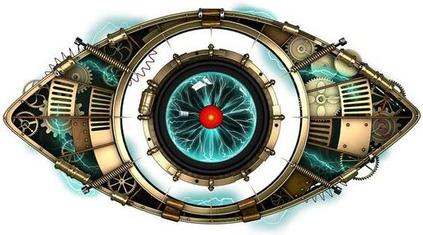 |
| I've been looking at how Big Brother is used as a 'social experiment' and immerses audiences into the lives of others. |
At its base, Big Brother is a psychological show. It is no coincidence that the producers selected psychologists to take part. The viewers are amateur psychologists and the programme's psychologists act as catalysts in a sense, drawing viewers' attention to things they might not have noticed."
 |
| In a world in which we are constantly being filmed I want to comment on the level of control over individuals lives it can hold. |
I find this useful as it deepens my understanding of how society can get so immersive into other peoples lives in these types of situations. I want to show how I think someone would react if it wasn't all planned out and they knew people were watching them as I feel they would react quite differently.
The way in which privacy has been lost and in which people are being monitored has been referred to as "worse than Orwell" by the UN's privacy chief in a recent Guardian interview which is a reference to George Orwell's work, primarily 1984 and how social elements are being controlled by use of propaganda, surveillance and misinformation.
http://www.theguardian.com/world/2015/aug/24/we-need-geneva-convention-for-the-internet-says-new-un-privacy-chief
http://www.theguardian.com/commentisfree/2014/nov/30/government-surveillance-privacy-internet
http://www.theguardian.com/commentisfree/2014/nov/30/government-surveillance-privacy-internet
Two books I have been reading recently have given me a lot of insight into how the level of control that can be used to control society. The first is very well known of course, 1984. A story about a dystopian society under a level of control and manipulation it wants to escape from. The second, The Establishment: and how they get away with it is similar in certain ways and relates to the issue of political control in modern establishment, this relates very much to Orwell's work however and the use of propaganda, a society strongly influenced by capitalists and out of the control of most of the public. All of these concepts have been very influential and explain how I came to the conclusion to develop Different Perspectives using these concepts.
Saturday, 10 October 2015
Pre Production Unit: Show Research & Influences
I decided to research further into some of the shows that have influenced me as well as programs that are similar in design to my project.
 The first show I researched was The Truman Show since the concept of being watched my TV cameras was highly important in helping me conceive of my idea. The concept is almost a reversal of the film with the main character, Elliott being the only one aware that he is being filmed. It is somewhat similar to mine in that it is also a comedy-drama although I have many other elements I want to include in my idea.


 The first show I researched was The Truman Show since the concept of being watched my TV cameras was highly important in helping me conceive of my idea. The concept is almost a reversal of the film with the main character, Elliott being the only one aware that he is being filmed. It is somewhat similar to mine in that it is also a comedy-drama although I have many other elements I want to include in my idea.
When I thought about how I wanted the show filmed, two shows immediately came up: Spaced and Peep Show. The former was because I am a fan of the Directing style of Armando Iannucci and the quick paced camera work he is known for implementing in his work. A fast pace will also give the show a lighter tone that might somehow me swallowed up by the darker tone of the story. I also wanted to create a show that has comedy elements which will be clear in its over the top aspects.

Peep Show was influential on me because of its camera POV shots that it is often known for. This gave me the idea of including this type of camera work as his mindset becomes more erratic, leading him towards self destruction as we see how paranoid he is getting.

Because of the concept of being followed by Television cameras and the dominance of media in todays society, Big Brother and other similar reality shows were highly influential. It helped me when coming up with messages about control and watching clips also helped me to understand how much it can drive people to levels of insanity.
 The concept of science fiction was also drive into my research, as this is something I have also been incorporating into my dissertation. The Twilight Zone has been useful as an example of a program that has been largely influenced by its creator, Rod Serling. It manages to show how he and the shows writers could incorporate social commentary throughout which helped to convey there own views under the guise of a popular fantasy/horror show. Besides the elements of distressing situations that occur this allows its creators to incorporate parts of their own personality into their show. Something that I have set out to do with my show.
 The concept of science fiction was also drive into my research, as this is something I have also been incorporating into my dissertation. The Twilight Zone has been useful as an example of a program that has been largely influenced by its creator, Rod Serling. It manages to show how he and the shows writers could incorporate social commentary throughout which helped to convey there own views under the guise of a popular fantasy/horror show. Besides the elements of distressing situations that occur this allows its creators to incorporate parts of their own personality into their show. Something that I have set out to do with my show.
Pre-Production Unit: Production Roles and Designing a Package
The elements of production that I want to partake in are primarily writing based for my Pre-Production project, Different Perspectives.
When making my high concept Pre-Production package there are a few things I want to include to convey my ideas -
 Treatment
One of the things I want to include as a part of my production package is a 3-5 page treatment for the idea. This will not only lay out exactly what I want from the show (concept wise) but it will also help when it comes to writing out the dialogue for the first episode script and designing the book. I am currently planning out the six episodes I want to tell my story.
Script
A script for the first episode will also be written as I have decided to make it a six-part episodic series following the advice I received in my pitch towards its formatting.
Book
The main thing I want to focus on is the book concept, this can include a detailed synopsis, characters, design choices, influences, style, tone, message etc. This will be a 24 page book using the 'blurb' website.
When making my high concept Pre-Production package there are a few things I want to include to convey my ideas -

One of the things I want to include as a part of my production package is a 3-5 page treatment for the idea. This will not only lay out exactly what I want from the show (concept wise) but it will also help when it comes to writing out the dialogue for the first episode script and designing the book. I am currently planning out the six episodes I want to tell my story.
Script
A script for the first episode will also be written as I have decided to make it a six-part episodic series following the advice I received in my pitch towards its formatting.
Book
The main thing I want to focus on is the book concept, this can include a detailed synopsis, characters, design choices, influences, style, tone, message etc. This will be a 24 page book using the 'blurb' website.
Tuesday, 6 October 2015
Pre-Production Unit: Pitch Presentation
Today I was able to present my idea as a powerpoint to half of the class as well as Laura and my lecturer, Simon.
I was a bit nervous when I got up to presenting but I happily it went very well and I got some useful feedback in the process. Andre and I were the only ones in our group to present high concept ideas.
When I got my feedback after I had pitched I was advised by a few people that the TV movie idea would work much better if I kept it as a short TV series instead. I could see why they would come to this conclusion as it is a lot to take in for a one off special. I will focus some of my efforts into reimagining the show in this context.
I will make a list of the elements that I would like to form in my Pre-Production package. This will make it much easier when it comes to my idea being marked. I'm looking forward to seeing what I can make and feel that the positiveness I received really helped in my confidence towards my own ideas.
I was a bit nervous when I got up to presenting but I happily it went very well and I got some useful feedback in the process. Andre and I were the only ones in our group to present high concept ideas.
When I got my feedback after I had pitched I was advised by a few people that the TV movie idea would work much better if I kept it as a short TV series instead. I could see why they would come to this conclusion as it is a lot to take in for a one off special. I will focus some of my efforts into reimagining the show in this context.
I will make a list of the elements that I would like to form in my Pre-Production package. This will make it much easier when it comes to my idea being marked. I'm looking forward to seeing what I can make and feel that the positiveness I received really helped in my confidence towards my own ideas.
Monday, 5 October 2015
Pre-Production Unit: Art Design
A few days ago I asked my girlfriend if she could draw out some character designs for my idea as well as draw out a logo which she was happy to do. I knew from the start of the project that I wanted a drawing element to feature prominently in the shows opening and through the shows advertisement. This will help its own distinctive look and style of branding.
Since the character of Elliott is a cartoonist I thought it would be cool to incorporate that aspect of his character into the shows style and credits. |
| This was the first logo which although I quite like it wasn't very eye-catching. |
 |
| The designs for the Agent characters (Vince and Gary) |
For the logo I decided that I wanted to implement the shows title into a Television camera, this helps to convey that Elliott is being followed.
 |
| This is how I intend for the logo of the show to look, featuring the main character; Elliot |
I am pleased with the results I have got so far as it is helping to shape the high concept idea I have in mind for this project.
Pre-Production Unit: Making Character Profiles
When it came to creating my characters I decided that I had to look into my influences for Different Perspectives.
Vince: A bitterly, sardonic
agent hoping for a promotion, he has a gravelly voice and works for the Television show's producers. He is very professional and will do anything to please his bosses. When I was coming up with his character, the actor that I had in mind was Peter Serafinowicz.
Elena: Elliott’s girlfriend, she works in the media industry and is more level headed than Elliott. She finds it hard to believe that her life has become a
part of a TV show and thinks that her boyfriend is losing his mind. Despite
this she remains his closest contact whist he all of this is happening.
Elliott: He is a pessimistic
illustrator in his mid-20s. He has a great love of TV and Film. Despite this he is shy and neurotic, which makes it very easy for him to panic at a moments notice. Despite this he cares a lot about his girlfriend and making sure that everything in his life is going well. Which means he will go to any lengths to look after others.
 |
| A Sketch of Elena - Elliott's girlfriend |
 |
| Elena wearing glasses |
K
F
I am happy with the characters that I have started to develop although they could still do with some tweaking before I write up there character profiles for the treatment + book. I will continue to research further into my characters although so far I am happy with the way it is progressing.
I am happy with the characters that I have started to develop although they could still do with some tweaking before I write up there character profiles for the treatment + book. I will continue to research further into my characters although so far I am happy with the way it is progressing.
Saturday, 3 October 2015
Pre-Production Unit: Development
I spent some time researching different films and TV show concept when making my idea. When I had a meeting with my lecturer Simon, one of the best pieces of advice he gave me was that no matter the concept, think of something that I would find appealing and actually want to sit down and watch.
I thought about some of my favourite movies and The Truman Show came to mind, suddenly I was thinking about the concept of a Television show within a show. I then came up with the idea of a guy being filmed, except that everyone else around him is oblivious to the cameras. In my mind it became almost like a reverse Truman Show.
I scribbled down notes and thought about what plot I could use for such a concept and how to develop it into a fuller idea.
I thought about some of my favourite movies and The Truman Show came to mind, suddenly I was thinking about the concept of a Television show within a show. I then came up with the idea of a guy being filmed, except that everyone else around him is oblivious to the cameras. In my mind it became almost like a reverse Truman Show.
I scribbled down notes and thought about what plot I could use for such a concept and how to develop it into a fuller idea.
 |
| Truman show was a large influence on developing the "show within a show" concept, as was Big Brother and other reality shows. |
- I knew that I wanted it to be a post-modern comedy-drama
- Possibly a series or a feature length TV movie (75-80 minutes)
- Aimed at 18-34 year olds
- Likely pitching it as a Channel 4 show
- Using elements of The Truman Show, Peep Show, Spaced
- A satirical comment on the medias ability to mold a false reality through brainwashing.
Developing The Story
A young character named Elliott is woken up one morning in a panic. He feels a sudden awareness that no one else possesses. He realises that he is on a Television show. After noticing that everyones he meets is oblivious to this he notices that everyone he knows is acting strange, almost as if they have been replaced by actors following a script(?) Elliott is however able to keenly predict some future events due to his knowledge of typical TV tropes and idioms. This leads to getting a reputation in the shows media at which point he starts getting followed..
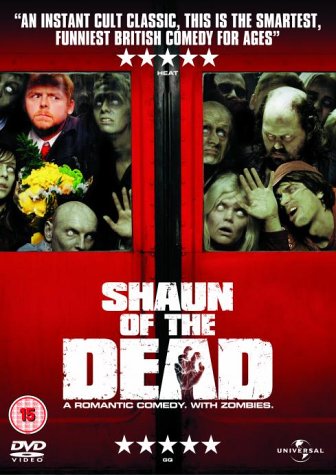 |
| Edgar Wrights directing style has influenced how I want to develop this concept. |
Conflicts
At some point our character hits upon a few questions; is he real? If he isn't, why should he care about trying to help the people he cares about? What constitutes reality in his reality, and how does he know for sure he isn't just dreaming?
Designing Characters
I know that I would like to put strong emphasis on designing interesting characters, especially since this idea is a high concept one. I have asked my girlfriend to design some drawings to my specifications for the idea. This is something I would like to include in the general aesthetic of the show. I will talk more about this at a later point.
Developing Style
When coming up with my concept I thought a lot about the tone I want to create. One thing i've always been a fan of is the style of Directing that Edgar Wright implements in his films, this means essentially fast cuts that can change to something unexpected at the drop of a hat. I feel that for my concept which is designed to be quite comical in a quite over the top way a quicker pace of Directing would stop it from getting too overly dramatic.
Wednesday, 30 September 2015
Pre-Production Unit: Professional Pre-Production
We have just started a new project to begin our 3rd year which, along with our Dissertation and Major Project will constitute our final productions in our final year on the course. Below is the project brief as well as my own outline so far on what I want to get out of this unit:
Project Brief
The aim of this unit is to produce a detailed Pre-Production “package” for an original production.
- This choice enables you to work on a large-scale idea that is aimed at competing with what is currently on television.
- You will produce a “package” that communicates your idea to a potential broadcast commissioner – but you will not be actually making the production. Stays at preproduction stage.
- It is hypothetical and it allows you think BIG and not to be constricted by a student sized budget.
- The concept can be anything you want it to be. Drama series, documentary, current affairs, entertainment etc etc
- The package can be made of a variety of elements – Pitch, script, casting, production design, trailer, camera tests, etc etc.
- Should be focused on your own interests.
What I want from this project
I am excited about starting this professional pre-production project because it gives me the opportunity to work on a high concept idea of which I can be as ambitious as I want!
- I would like to create a comedy-drama using elements of my own influences and ideas.
- A plot synopsis describing what it is I want to happen for my concept idea.
- Character outlines
- Research into ideas that relate to my chosen production as well as what audience + time-slot I am aiming towards.
- To have a big, but realistic idea of what could be chosen for a mainstream TV channel
- Above all, I want to put my own stamp on this project so that people will remember it and that it will hold their attention.
I will set out what it is I want for this project and build on my concept, particularly in terms of what I can use to convey the vision I have in mind for it.
This is really exciting to me, knowing that I can go anywhere with this project and I can't wait to progress in developing this package!
Sunday, 26 April 2015
Studio Production: Critical Reflections
Looking back on the work that was achieved through the Live Show I feel that I was able to successfully achieve what I set out to do in all of the jobs that I was given. I did have a few moments of trial and error as I went along but I feel that I was still able to keep a consistent level of achievement throughout the process. Considering the slightly minor department I was working in I feel that we were able to contribute towards the show in a way that made much more of an impact than was expected of us.
Looking back if there were a few things I would change it would most likely be that the planning between different people was better. Unfortunately there was a lack of communication, mainly at the beginning which resulted in a lot more questions having to be asked than perhaps necessary.
One of the most important experiences I learnt through this whole project has to do with working in a large collaborative environment. The professional manner in which it was conducted gives me a further indication of what it is actually like to work in the Television industry. If I was to perform my roles in a different way in future I would make sure to spend more time planning the different elements of the production I took a part of.
Looking back if there were a few things I would change it would most likely be that the planning between different people was better. Unfortunately there was a lack of communication, mainly at the beginning which resulted in a lot more questions having to be asked than perhaps necessary.
One of the most important experiences I learnt through this whole project has to do with working in a large collaborative environment. The professional manner in which it was conducted gives me a further indication of what it is actually like to work in the Television industry. If I was to perform my roles in a different way in future I would make sure to spend more time planning the different elements of the production I took a part of.
Saturday, 28 March 2015
Professional Practice: Interview with Jeremy + Editing
Yesterday we were able to get our interview with Jeremy. (the Educational Officer at the Guildhall Museum) We made sure that we had a lot of coverage for our film.
Jeremy was very accommodating and polite when I asked for a few extra takes. I was using the Rode Shotgun sound mic on this particular day to record audio, whilst Ruby was behind the camera. He answered the questions coherently and clear so we left confident that the interview had gone very well.
 Afterwards we went to Rachel's office to discuss when they can expect to see the finalised film edited. She suggested that she wanted to see the films edited by us separately over Easter break and then she would give us feedback closer towards the end of April once she got back. So I am going to start editing my own version of the film and see how it goes.

Jeremy was very accommodating and polite when I asked for a few extra takes. I was using the Rode Shotgun sound mic on this particular day to record audio, whilst Ruby was behind the camera. He answered the questions coherently and clear so we left confident that the interview had gone very well.
Saturday, 21 March 2015
Professional Practice: The Guildhall Museum (Day 6)
Yesterday we were back at the Guildhall museum to get some alternate footage of Jeremy giving a short lecture/seminar to the children. The main purpose of today however was to get as much useful cutaway footage as is necessary. We also talked to Jeremy with the intent of setting up an interview that we can use throughout the film to explain what the Curriculum of North Kent (CONK) is, who are its heritage partners and what does it set out to do etc.

I was able to get some great footage of a group of the schoolchildren who were situated around the museum site. The sound was really good on this day as well particularly considering the narrowness of some of the rooms.
I would consider the shooting day to have been a success with no major problems getting in the way of filming.

This might possibly be the last day of shooting for the project besides Jeremy's interview/narrative, but we'll see what happens after the Easter break.

I was able to get some great footage of a group of the schoolchildren who were situated around the museum site. The sound was really good on this day as well particularly considering the narrowness of some of the rooms.
I would consider the shooting day to have been a success with no major problems getting in the way of filming.
This might possibly be the last day of shooting for the project besides Jeremy's interview/narrative, but we'll see what happens after the Easter break.
Subscribe to:
Comments (Atom)